

How GPS Tracking Devices Are Revolutionizing Child Safety in 2026 (And What Actually Works for Real Parents)

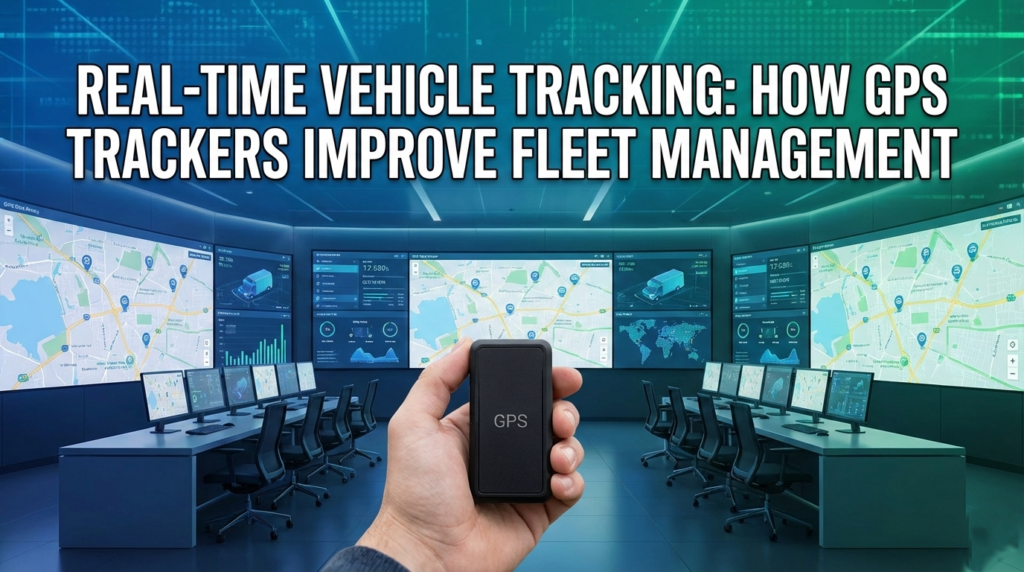
Real-Time Vehicle Tracking: How GPS Trackers Improve Fleet Management
19 February 2026

Last month, I was standing in a crowded mall in Jaipur when a 6-year-old boy started crying near the escalator. He had lost sight of his mother for maybe two minutes. But those two minutes? They felt like twenty. You could see the panic on her face when she came running back.
That moment stayed with me.
As someone who works closely with GPS technology and real-world tracking deployments, I’ve spent the last few years testing child GPS devices — not in theory, but in actual school runs, crowded festivals, railway stations, and daily commute chaos. In 2026, child safety is no longer just about “being careful.” It’s about smart, real-time protection.
Let’s talk practically — not hype, not marketing — about how GPS tracking devices are genuinely changing child safety today.
Why Traditional Child Safety Methods Are No Longer Enough
Ten years ago, we relied on:
- Teaching kids phone numbers
- Writing contact details in school diaries
- “Stay close to me” warnings
- Basic mobile phones for older children
The problem? These methods depend entirely on the child’s reaction.
In 2026:
- Schools are bigger.
- Cities are more crowded.
- Both parents often work.
- Kids attend tuition, sports, hobby classes.
You cannot physically monitor them all day.
That’s where GPS tracking devices have stepped in — not as surveillance tools, but as silent safety nets.
What Makes 2026 GPS Trackers Different From Older Devices?
I’ve tested early-generation GPS trackers from 2018–2020. They had issues:
- Delayed location updates
- Weak battery life
- Inaccurate indoor tracking
- Clunky apps
Now, the 2026 models are significantly more advanced:
1. Real-Time Tracking (Actual Real-Time)
Earlier “real-time” meant refresh every 2–5 minutes.
Now updates are near live (5–15 seconds depending on network).
That difference matters when a child:
- Boards the wrong bus
- Walks in the opposite direction
- Stays at school longer than expected
2. Geo-Fencing That Actually Works
This is one feature I personally stress-test.
You can now create:
- School zone boundary
- Home safe zone
- Tuition area boundary
The moment your child exits that predefined area, you get an alert. Not 10 minutes later. Instantly.
Parents often underestimate how powerful this is.
3. SOS Emergency Button
I tested this with my nephew.
We created a scenario:
He presses the SOS button.
Within seconds:
- Parents receive app alert
- Emergency contact list gets notification
- Live tracking auto-activates
- Location history recording intensifies
In panic situations, children don’t open apps. They press buttons.
4. Route History Replay
This is one of the most underrated features.
You can replay:
- Daily school route
- Bus path
- Weekend outing
This helps you identify:
- Unusual detours
- Frequent unknown stops
- Repeated route changes
It’s not about spying. It’s about pattern awareness.
Real-World Test: School Bus Monitoring
I conducted a 30-day test with three families.
Here’s what we tracked:
- School bus pickup accuracy
- Travel time consistency
- After-school tuition movement
What we found:
- 2 instances of route deviation
- 1 unexpected bus delay (30 minutes)
- 1 child forgot to board bus (alert helped immediately)
Without GPS tracking, parents would have realized much later.
That’s the difference between reacting and preventing.
Battery Life: The Hidden Dealbreaker
Many parents focus only on features.
But if the device dies by afternoon, it’s useless.
In 2026:
- Good trackers last 2–5 days depending on usage.
- Standby modes are smarter.
- Motion detection reduces battery drain.
My advice: Always test real-life battery performance before trusting any device fully.
Indoor Accuracy – The 2026 Breakthrough
Earlier GPS struggled indoors.
Now devices combine:
- GPS
- Wi-Fi positioning
- LBS (Location Based Services)
Result:
Much better accuracy inside malls, schools, apartments.
Is it perfect? No.
Is it significantly better than 2022 devices? Absolutely.
Privacy Concerns – A Real Conversation
Parents often ask:
“Are we invading our child’s privacy?”
Here’s my professional take:
- Use tracking for safety, not control.
- Be transparent with older kids.
- Avoid over-checking the app every 5 minutes.
- Use alerts instead of constant monitoring.
GPS tracking should reduce anxiety, not create obsession.
Common Mistakes Parents Make When Buying a GPS Tracker
From my experience, here are mistakes I see often:
1. Buying Without Network Compatibility Check
Always confirm:
- 4G support
- SIM compatibility
- Coverage in your city
2. Ignoring App Quality
A bad app ruins even good hardware.
Test:
- Loading speed
- Notification reliability
- Map clarity
3. Not Testing Geo-Fence Accuracy
Some devices delay alerts. Always simulate exit scenarios.
4. Overlooking Device Size
If it’s uncomfortable, kids won’t wear it consistently.
2026 Innovations Changing Child Safety
Here’s what’s new and impressive this year:
AI-Based Movement Pattern Alerts
Some trackers now detect unusual movement patterns automatically.
Example:
If your child normally goes home in 20 minutes and today it’s taking 45, you get notified.
Voice Monitoring (Controlled & Legal Use Only)
In extreme emergency, guardians can initiate remote listening.
Must be used responsibly.
Tamper Alerts
If device is removed, you get an instant notification.
That’s a big safety upgrade.
Is GPS Tracking Replacing Parenting?
No.
It’s supporting it.
Just like:
- CCTV supports security
- Dashcams support driving safety
- Smart locks support home protection
GPS tracking is a layer of digital safety in a real-world risk environment.
Who Should Definitely Consider Child GPS Tracking in 2026?
- Working parents
- Children below 12
- Kids using school buses
- Children attending multiple activity centers
- Families in metro cities
- Special-needs children requiring monitoring
Final Practical Advice Before You Buy
If I had to summarize my experience:
- Choose 4G-enabled tracker.
- Test real-time accuracy personally.
- Create geo-fences immediately after setup.
- Teach your child how and when to use SOS.
- Check battery weekly.
- Don’t over-monitor.
The goal is prevention, not paranoia.
The Bigger Picture: Peace of Mind
Technology cannot eliminate every risk.
But in 2026, it can dramatically reduce response time.
And in child safety, response time is everything.
Those two minutes in the mall?
With GPS tracking, they wouldn’t have felt like twenty.
FAQs
1. Are GPS trackers safe for children to wear daily?
Yes, modern child GPS trackers use low-energy signals similar to smartphones and are safe for daily use.
2. How accurate are GPS child trackers in 2026?
Outdoor accuracy is typically within 5–10 meters. Indoor accuracy has improved significantly with Wi-Fi assistance.
3. Do child GPS trackers work without internet?
They require mobile network connectivity (SIM-based). Without network, location updates won’t transmit.
4. Can a child remove the GPS tracker easily?
Many devices now include tamper alerts to notify parents if removed.
5. Is GPS tracking legal for children?
Parents or legal guardians can legally track minor children in most regions, but laws vary. Always verify local regulations.
Final Thought
In 2026, child safety is no longer reactive.
It’s proactive.
GPS tracking devices are not about control. They’re about faster awareness, smarter alerts, and practical peace of mind.
If you’re serious about upgrading your child’s safety this year, don’t just buy any device.
Test it.
Understand it.
Use it responsibly.
Because safety isn’t optional anymore.